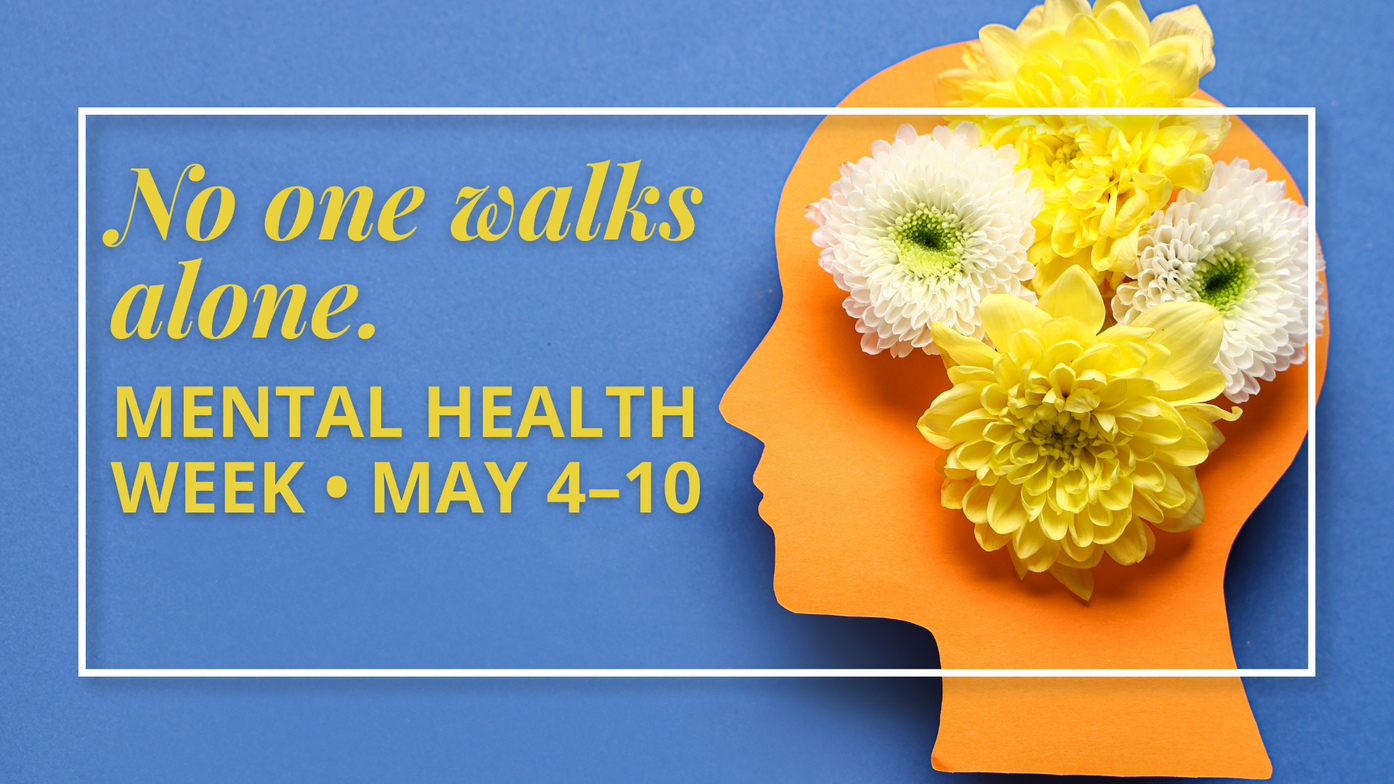
Mental Health Week • May 4–10
.jpg)
Dear friends at Peninsula United,
May 4–10 is Mental Health Week in Canada. Though it has become easier to speak openly and supportively about mental health since the 50s and 60s when I grew up, we still have a long way to go.
A snapshot of mental health in Canada today:
- Mental health challenges are common, not rare.
- 1 in 5 Canadians experience a mental illness or significant mental health issue in any given year.
- 1 in 3 will experience a mental illness in their lifetime.
- Youth and young adults (15–24) report the highest levels of distress, especially anxiety and depression.
- Women are more likely to seek care; men account for more deaths by suicide.
- Indigenous peoples, racialized communities, low-income households, and rural/remote communities face disproportionate burdens and barriers.
- Most Canadians know multiple people living with depression, anxiety, substance use disorders, or other mental health conditions.
- When someone believes they “don’t know anyone,” it usually reflects stigma and nondisclosure.
- In 2022, only about half of Canadians meeting diagnostic criteria spoke with a health professional.
- Over half reported inadequate care due to cost, waiting times, and limited availability.
- Mental illness costs Canada an estimated $50 billion annually.
- Suicide remains a leading cause of death among young Canadians.
- Teen girls face unique pressures around body image, beauty standards amplified by social media, and online bullying.
Why this matters now.
In 2026, more of our connection happens through screens. Digital connection has its place, but it cannot replace the healing power of being together. Loneliness is rising across all age groups.
Human connection — real presence, shared time, embodied care — activates the brain’s reward system and supports wellbeing. People who connect both in person and online are less likely to feel lonely than those who rely only on virtual connection.
A pastoral invitation
Mental Health Week reminds us that these struggles are not distant — they are part of our shared life. Someone you know is carrying more than they show.
As a community shaped by the compassion of God in Jesus through the Spirit, we can take simple steps that matter: a checkin, a listening ear, a moment of real presence. No fixing. No rushing. Just care.
Over the years, I have presided at many funerals where mental health challenges contributed to the person’s death. At each service, I invite those attending to spend 30 minutes on a reputable mental health website to learn accurate information about suicide — to dispel myths and to learn how to support someone showing risk signs. I invite and encourage you to do the same this week.
Let us keep becoming a congregation where stigma has no home, where honesty is welcomed, and where no one walks alone.
We affirm the words of this hymn (Marty Haugen):
Healer of our every ill,
light of each tomorrow,
give us peace beyond our fear,
and hope beyond our sorrow.
Thanks, and blessings,
Jim
7788876236
minister@penninsulaunited.com
Find resources or learn more about Mental Health Week at CMHA website.